Augmentative & Alternative Communication (AAC)
AAC stands for Augmentative and Alternative Communication. It refers to different methods people use to communicate when they can’t rely on verbal speech alone. Alternative communication is used when a person cannot speak or is difficult to understand, so various programs are used instead of verbal speech to convey needs, wants and ideas. Augmentative communication involves adding tools or strategies—like pictures, writing, drawings, or speech-generating devices—to help make spoken messages clearer. Some individuals use AAC in place of speech, while others use it to supplement or clarify their verbal speech.
Common AAC Misconceptions and reality:
MYTH: The use of AAC will impede the development of spoken language
REALITY: Great news! Research shows that using AAC does not stop someone from talking. In fact, many studies have shown that AAC often supports and encourages speech development. For children who can learn to speak, AAC can be a bridge to help them communicate more clearly and effectively while speech is still developing. For others, it provides a reliable way to express themselves when talking remains difficult. AAC does not replace the desire or ability to speak—it simply gives another tool to assist with communication.
MYTH: Children can be too young to use AAC
REALITY: It is never too early to begin enhancing communication. AAC provides visual supports and voice output that can positively impact language, cognition and literacy skills. It could help children with disabilities have access to and participate in the same educational, social and play activities as peers.
MYTH: Children need to start with low-tech options before they try high-tech.
REALITY: There is no current evidence to suggest that low-tech systems have to be trialed before high-tech options.
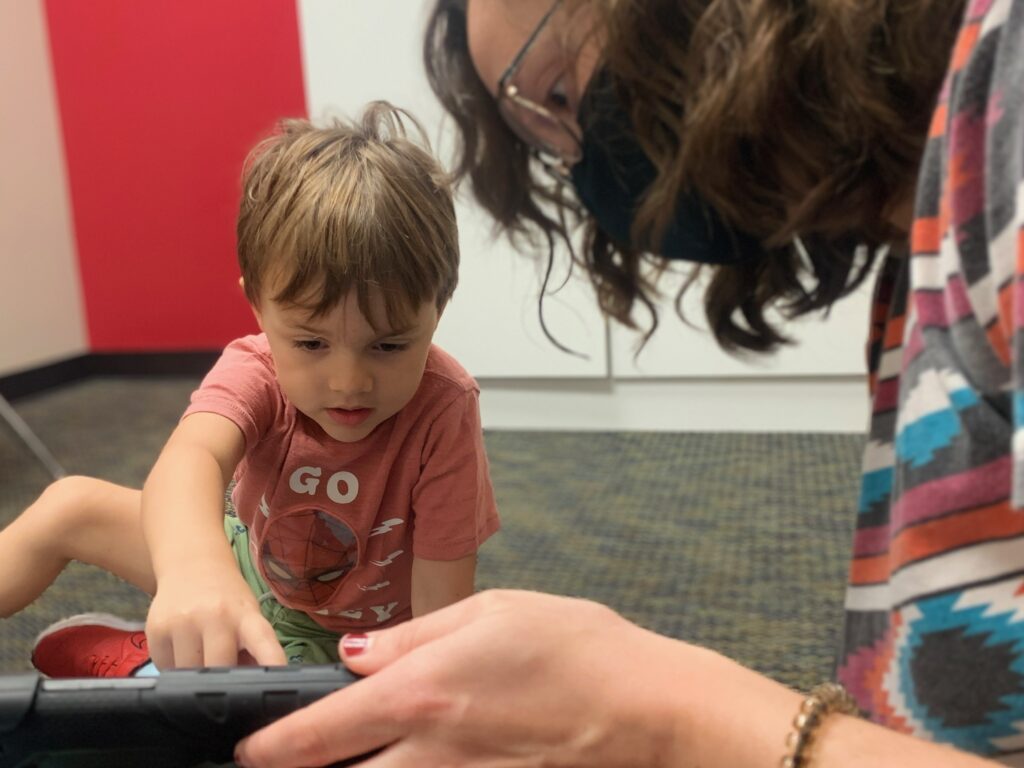
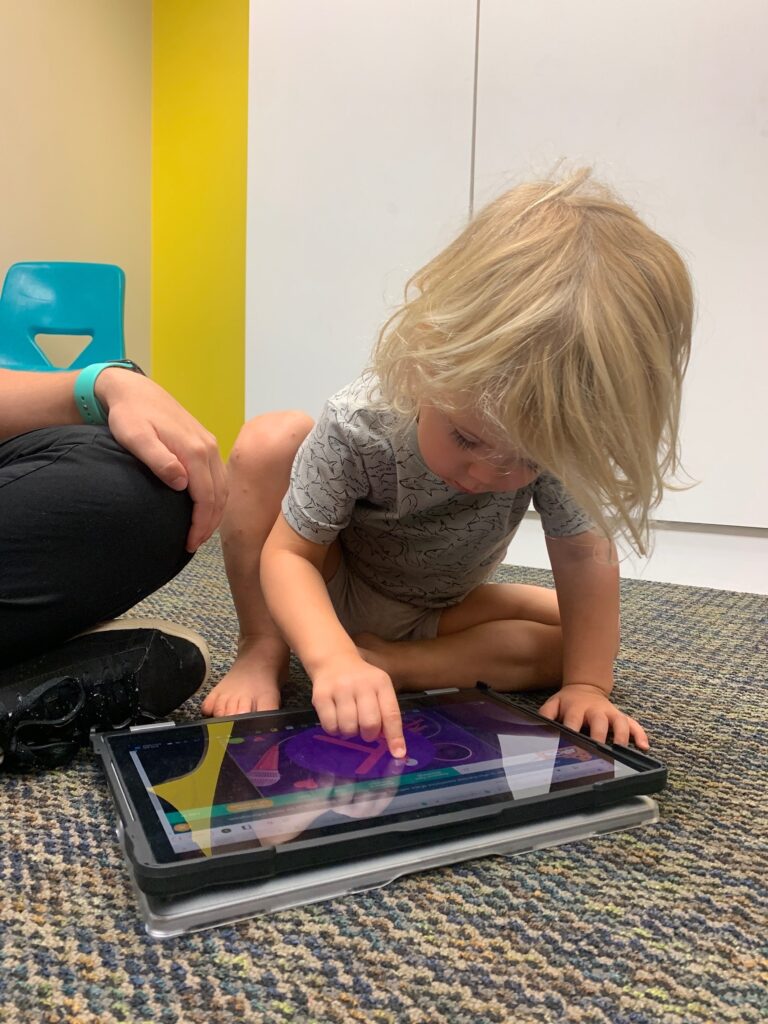
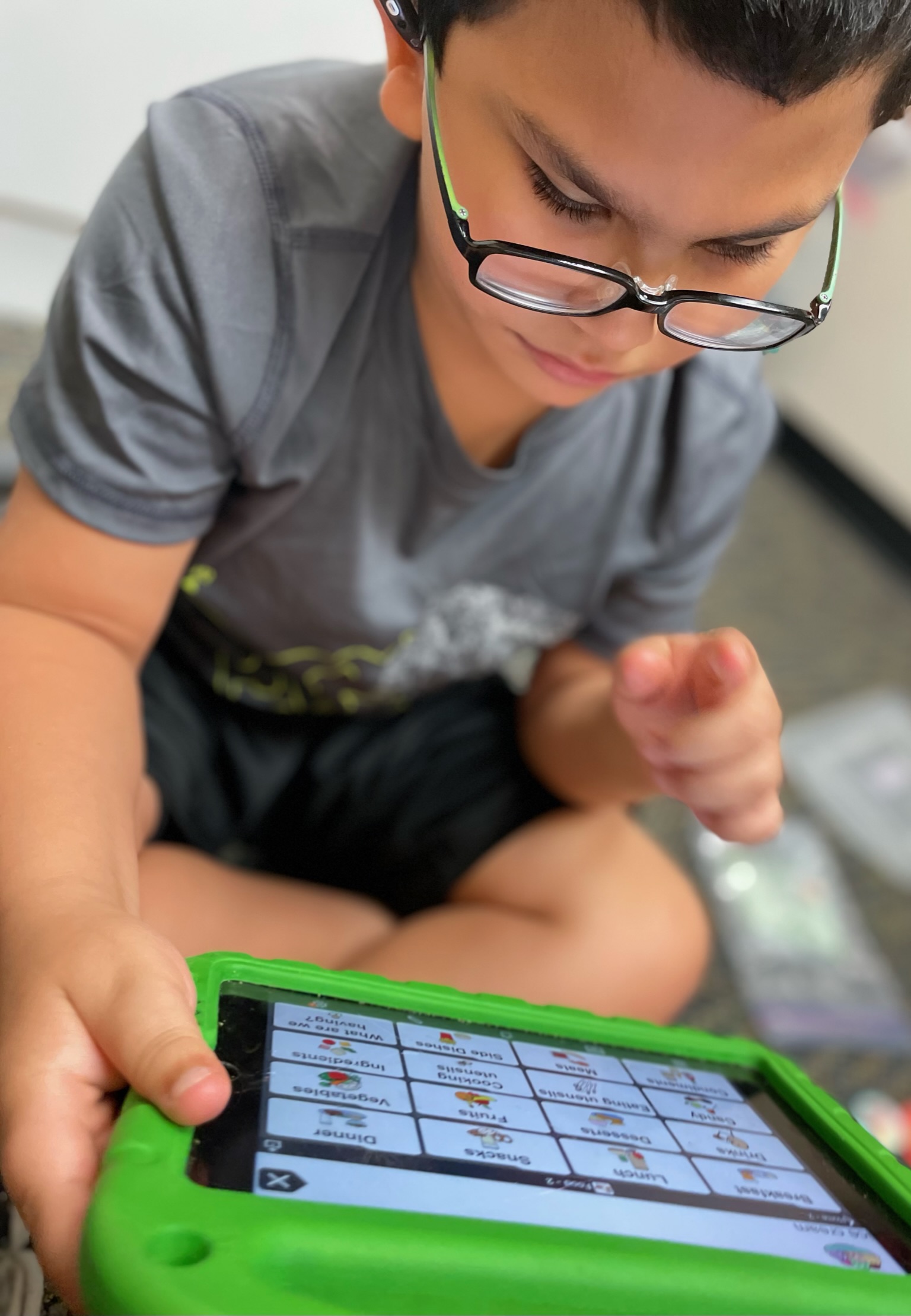
There is a wide variety of AAC types. AAC tools can range from no-tech or low-tech options such as facial expressions and gestures, writing or drawing, picture cards etc. To more advanced mid-tech or high-tech systems such as recordable switches, iPads with communication software or speech-generating devices.
AAC can support your child in expressing their wants and needs, building connections with others, and enhancing their overall quality of life. Additional benefits of AAC include:
- Allowing your child to communicate at their true ability level
- Providing an alternative way to communicate when verbal speech is difficult
- Supporting the development of language skills
- Improving communication with unfamiliar people
- Reducing communication breakdowns
- Lowering frustration related to communication challenges
- Boosting confidence in expressing themselves
What diagnoses might be helped with AAC?
Any diagnosis! However, some common ones include:
- Childhood Apraxia of Speech
- Severe Articulation or Phonological disorders
- Autism Spectrum Disorders
- Selective Mutism
- Down Syndrome
- Cerebral Palsy
- Craniofacial anomalies (ex. cleft palate)
- And so many more